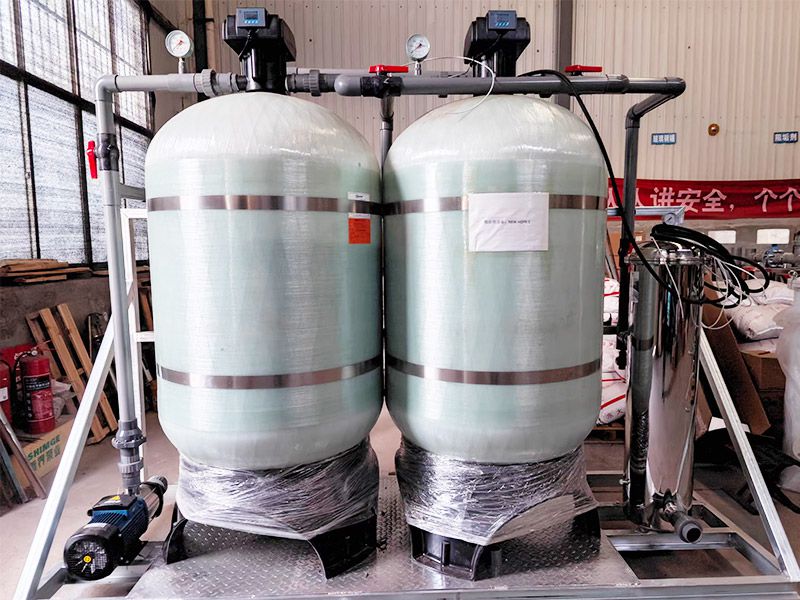
Water softening equipment can be applied to soften make-up water for systems such as steam boilers, hot water boilers, heat exchangers, evaporative condensers, air conditioning systems, and direct-fired engines. It can also be used for the treatment of domestic water in hotels, restaurants, office buildings, and apartments, as well as for softening water in industries like food, beverages, brewing, laundry, printing and dyeing, and chemicals. Currently, it is used in circulating make-up water for equipment and systems such as steam boilers, hot water boilers, heat exchangers, steam condensers, air conditioning systems, and direct-fired engines. In addition, it serves for domestic water treatment, industrial water treatment in food, electroplating, chemicals, printing and dyeing, textiles, and electronics, as well as pre-treatment in desalination systems.
Maintenance of water softening equipment:
The raw water quality should meet the general requirements for sodium ion exchange water treatment equipment; the equipment should be installed indoors to prevent resin freezing, component rust, and electrical short circuits. The ambient temperature should be above zero, free of steam, and in a relatively dry and clean location. After the equipment is positioned, retighten the fixing bolts and ensure the distribution panel casing is grounded. The upper and lower bolts of the crank fixed block on the rotary valve must not be loose, and the exchange columns should not be struck. Do not adjust the time relay while the equipment is operating. When maintaining or cleaning the equipment, the power must be cut off, and care must be taken to prevent water from entering the motor, distribution panel, and limit switches. During operation, water and electricity should be supplied simultaneously, and both should be turned off during shutdown. Keep the equipment clean regularly, ensure lubricated parts are adequately oiled, and avoid touching the pulleys during operation to prevent accidents.